Cryptocurrency (or “crypto”) is a digital currency secured by cryptography and built on blockchains. These are decentralized networks that exist only online and operate independently of any government or bank. Rather than being physical money, crypto is a digital ledger entry that records all transactions across a network of computers. .Bitcoin is the most well-known crypto and was first introduced in 2009.Since then thousands of other tokens have been created, each with their own features and uses.
Importantly for beginners, many people trade crypto for profit rather than use it as a currency. In fact, a large part of the crypto market is speculators buying and selling to capture price moves. This guide will explain how the crypto market works, what drives prices, and how traders can trade crypto – often without even holding any coins.
The Cryptocurrency Market
Cryptocurrency markets are global and always open. Unlike stock markets that close at night or on weekends, crypto exchanges run 24 hours a day, 7 days a week. This means you can trade at any time (holidays or late at night) from anywhere in the world. Crypto markets are completely decentralized: transactions happen peer-to-peer, and all trades are recorded on blockchains instead of a central server. Anyone with an internet connection can join in – no special clearance or bank is needed.
- 24/7 trading: Crypto never sleeps. Traders around the globe can buy or sell at any minute. There is no daily closing bell.
- Decentralized ledger: Every crypto transaction is added to a public blockchain. This digital ledger is maintained by a network of computers and ensures transparency and security.
- Open access: Unlike some traditional markets, almost anyone can trade crypto (with some local exceptions). You don’t need accredited investor status or permission to open an account on most crypto exchanges.
How Cryptocurrency Prices Change
Crypto prices move largely by supply and demand and market sentiment. In simple terms, if more people want to buy a coin than sell it, the price goes up, and vice versa. But many specific factors influence supply and demand: for example, the total supply of coins, the rate at which new coins are created (or lost), and how much people perceive the market is growing (its market capitalization) all matter. Other important drivers include:
- Market News & Events: Headlines on regulation,or major company adoption can cause sudden price swings (positive or negative).
- Media Coverage and Hype: Social media, news outlets, and influencer buzz can create rapid buying or selling frenzies. For instance, positive news can send prices “skyward,” while rumors can cause sharp falls
- Technology and Integration: Updates or new features (like an upgrade to a blockchain) can affect demand. Greater use of a crypto in real-world payments or apps can boost its price.
- Market Capitalization and Liquidity: Smaller coins (lower market cap) can jump wildly even on small trades, while large-cap coins (like Bitcoin) are more stable (but still volatile). More coins in circulation (supply) and how readily they can be bought/sold (liquidity) affect price moves.
- Macroeconomic Factors: Inflation, interest rates, and global economic trends can influence crypto. For example, some traders treat Bitcoin as a “digital gold” hedge against inflation.
In practice, crypto markets tend to be relatively volatile. Traders use charts and analysis tools to try to predict these moves, as the risk-reward ratio is considerably higher compared to other asset classes.
Trading Crypto: Spot vs Derivatives
To trade crypto, you have two main approaches:
- Spot (buying the coin): You buy actual cryptocurrency on an exchange, pay its full price, and hold it in your digital wallet. This is like buying stock in a company – you own the physical asset. Spot trading requires a crypto wallet and usually involves transferring actual crypto tokens.
- Derivatives (betting on price moves): You trade contracts that track crypto prices (like futures or CFDs – Contracts for Difference). With derivatives, you never own the coins. Instead, you speculate on whether the price will go up (long position) or down (short position). If the market moves as you predicted, you earn the difference; if it moves against you, you incur losses. For example, a futures contract might lock in a price today for settlement next month. When it expires, the profit or loss is simply the difference between the contract price and the market price.
Traders often rely on price charts and technical indicators (like moving averages, RSI, trend lines) to decide when to enter or exit a trade. Using derivatives (such as futures or CFDs) lets you trade on short-term price swings without owning any crypto. Importantly, most derivatives are leveraged: you can control a large position with a small amount of capital. Leverage amplifies gains but also amplifies losses. For example, 10× leverage means a 10% price move could give you 100% profit or a 100% loss. Beginners should be very cautious with leverage and do thorough research before trading derivatives.
Why Has Crypto Been So Volatile?
Cryptocurrencies have been known to be notoriously volatile. It’s common to see a 5–10% price swing in a single day, and double-digit percentage moves are not unusual on some less popular coins. Several reasons explain this volatility:
- New, Emerging Asset: Crypto is still a young asset class. With a relatively small total market value, it takes little new capital to move prices significantly. For example, when a few big investors trade large amounts, it can swing the market more than it would for a mature market like the S&P 500.
- Round-the-Clock Trading: Because crypto markets run 24/7, prices can jump on news at any moment (even on weekends). There is no “cooling off” period overnight. If something happens while other markets are closed, crypto prices can react instantly.
- Speculation and Leverage: A lot of trading is speculative. Many traders use leverage (margin), which tends to exaggerate moves. When prices rise quickly, leveraged buyers pile in, and when prices drop, leveraged positions get liquidated, accelerating the fall.
- FOMO and Emotion: Crypto markets often see strong fear of missing out (FOMO). When a coin starts surging, more traders jump in purely from hype, driving the price even higher – until a sharp pullback occurs. Likewise, panic selling can cause steep falls.
- Regulatory and Tech News: Announcements about government regulations or blockchain upgrades can trigger outsized reactions. For instance, a small regulatory change in one country can send global prices flying or dropping, even if the real economic impact is minor.
In short, volatility in crypto creates big opportunities for profit, but also big risks if not managed properly. Beginners should be aware that “high volatility can make positions highly unpredictable”.
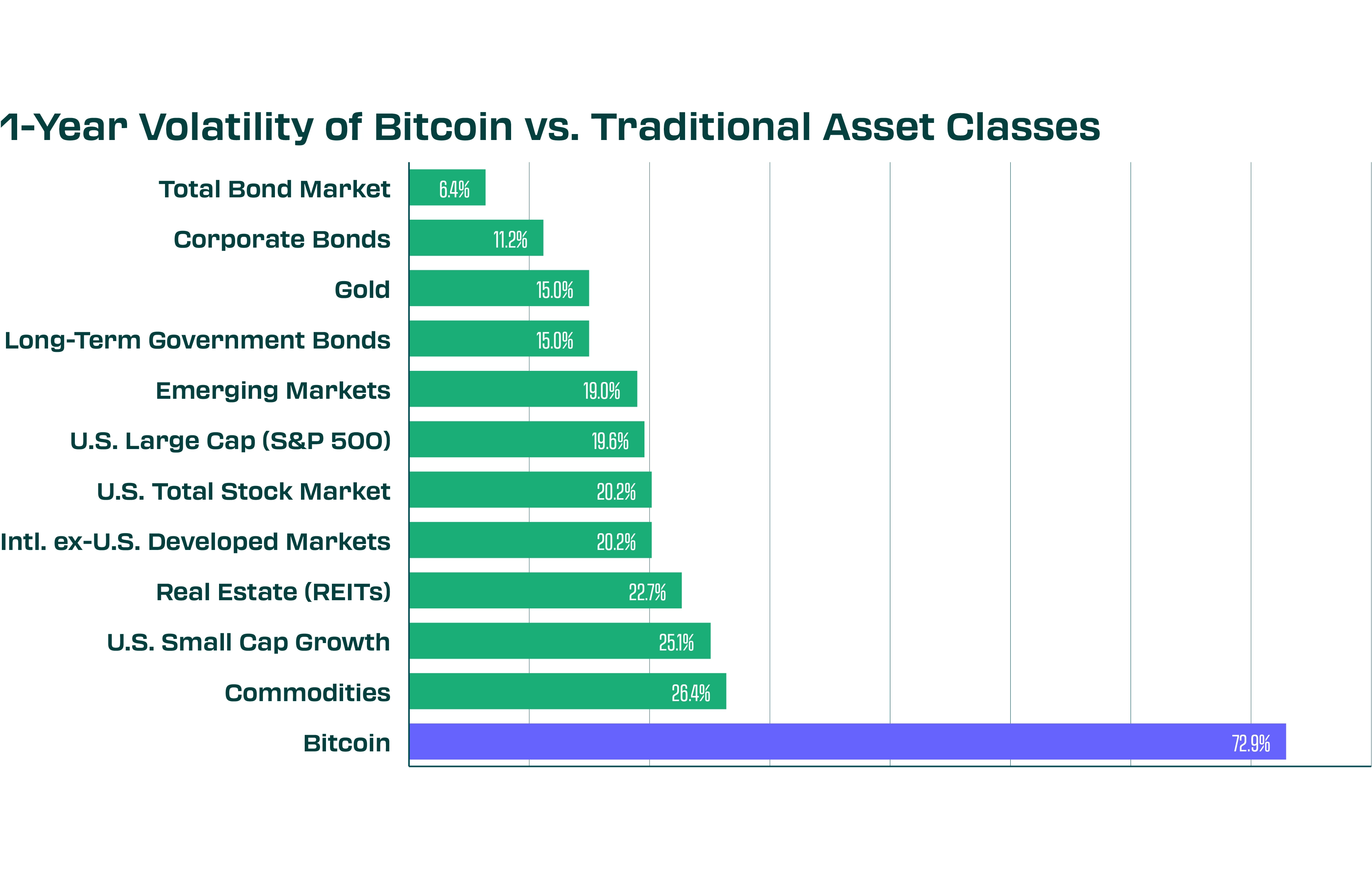
The chart above illustrates Bitcoin’s historically high volatility compared to traditional markets. As the asset class is still relatively small, even moderate news can trigger large price swings, but over time volatility may decline as crypto markets mature.
What Beginners Should Know Before Trading
Crypto trading can be exciting, but beginners must be prepared. Here are key points every new trader should understand:
- Education is crucial: Before risking real money, learn the basics of trading ( risk management, order types, technical indicators) and the specifics of crypto (blockchain fundamentals, common coins). Many exchanges offer demo accounts or sandbox trading you can practice with.
- Risk Management: Never trade without a plan. Experienced traders always use stop-loss orders to automatically close a position at a set price to limit losses. Also never risk too large a share of your capital on a single trade – a common rule is no more than 1–2% of your trading account per trade. This way, even a series of losses won’t wipe you out. Diversify positions and consider taking profits on big moves. Proper risk management (position sizing, stop-losses, etc.) is “necessary” for crypto traders.
- Start Small: Only use money you can afford to lose. It’s wise to begin with a small amount while you learn the ropes. It is important to remember that with leveraged crypto trading, you can lose more than your initial investment, so caution is vital.
- Beware of Fees and Slippage: Crypto markets can be less liquid than stocks, especially for smaller coins. Large orders may “slip” to a worse price. Compare trading fees across platforms, and use limit orders (set exact buy/sell prices) whenever possible to avoid unexpected execution problems.
- Stay Informed: Crypto news moves fast. Follow credible news sources and avoid FOMO-driven hype. Regulatory changes or security issues at exchanges can have immediate market impact. Being aware of the broader economic context (like interest rates or currency moves) also helps.
- Emotional Control: Volatile markets can trigger greed or panic. Stick to your trading strategy. Avoid impulsive “chasing” of prices or holding onto losing trades hoping for a rebound – such “hope trades” often lead to bigger losses.
By keeping these fundamentals in mind, beginners can approach crypto trading more safely and intelligently. Remember: crypto is high-risk by nature, so patience, discipline, and continuous learning are key to any success.
Each trader’s situation is unique, but understanding these basics and doing your own research will help you start trading crypto more confidently. Always stay well informed, diversify your portfolio and keep learning as you go.
FAQs
Do I need to own cryptocurrency to trade it?
No, you don’t need to hold coins. Many brokers offer derivatives (like CFDs or futures) that let you trade crypto price movements without owning any crypto. With these, you simply take long or short positions on price changes. However, if you want to buy and hold crypto, you will need to purchase coins on an exchange and store them in a wallet.
Can I trade cryptocurrency 24/7?
Yes. Cryptocurrency markets never close. This means that news or events at any time can immediately affect prices.
What moves crypto prices?
Crypto prices are driven by numerous factors, including supply and demand. Key factors might be the number of coins in circulation, news (regulatory changes, adoption announcements), macroeconomic trends, and investor sentiment. For example, a positive endorsement by a company or country can raise demand, while a security breach can spark selling.
What is leverage, and how does it work?
Leverage is essentially borrowed funds that let you control a larger position with a smaller investment. For example, 10× leverage means you only put down 10% of a trade’s value. The upside is bigger potential profits, but the downside is also bigger potential losses (your gains and losses are amplified). Beginners should be very careful with leverage and understand margin requirements.
How much money do I need to start trading crypto?
Our crypto accounts start from $35.
How can I avoid losing too much money?
The most important strategy is risk management. As mentioned, use stop-loss orders and never risk more than a tiny percentage of your capital on one trade. Diversify trades rather than putting everything in one coin. Keep learning and refining your strategy, but it’s important to understand that losses are a normal part of trading. Is crypto trading legal and regulated? Cryptocurrency trading is legal in most places, but regulations vary. Some countries allow it freely, while others have banned or restricted certain crypto activities. For instance, trading crypto derivatives can be restricted or banned in some jurisdictions. Always check the rules in your country. Use regulated exchanges when possible, and be aware of tax obligations (gains from crypto trading are taxable in many regions).