Contracts for Difference (CFDs) are popular trading instruments that let you speculate on the price movements of assets without actually owning those underlying assets. They enable you to benefit from both rising and falling markets across a vast range of financial instruments, including forex, stocks, indices and commodities.
Instead of buying an asset outright, you enter into a contract with a broker to exchange the difference in the asset’s price from when you open the trade to when you close it. In simple terms, you profit if the market moves in your favour, and you lose if it moves against you.
We’ve created this beginner’s guide to help get you started on your trading journey. The guide covers what CFDs are, how they work, why traders use them, and the key benefits and risks to understand before you start trading.
What Is a CFD (Contract for Difference)?
A Contract for Difference (CFD) is essentially an agreement between you and a broker to pay each other the difference in an asset’s price from the time the contract is opened until it is closed. With a CFD, you never own the underlying asset. No physical shares or commodities are exchanged - it’s purely a trade on price movement.
Why is this useful? It means you can trade on both rising and falling markets. If you expect an asset’s price to rise, you will purchase the CFD or “go long”. If you expect it to fall, you sell an opening position or “go short”. This flexibility to go long or short is a key feature of CFD trading. To close the position, you must buy or sell the offsetting trade and the difference of the opening and closing price is your profit or loss seen immediately in your trading account. In traditional investing you only profit when prices go up, but CFDs let you potentially profit in down markets too, by short-selling.
CFDs allow you to speculate on all kinds of markets - stocks, forex (currencies), commodities, indices, cryptocurrencies, and more - all from a single trading platform. They are derivative products, meaning their value is derived from an underlying market price. You’re trading based solely on that price, so you don’t have to deal with owning or storing the underlying asset.
How Does CFD Trading Work?
When you trade a CFD, you decide which asset you want to trade and choose a position size (how many units or contracts) and direction (buy/long or sell/short). CFD trading allows you to open positions and trade with a high degree of leverage. This means you can gain exposure to financial markets without having to put up the full cost of the position at the outset.
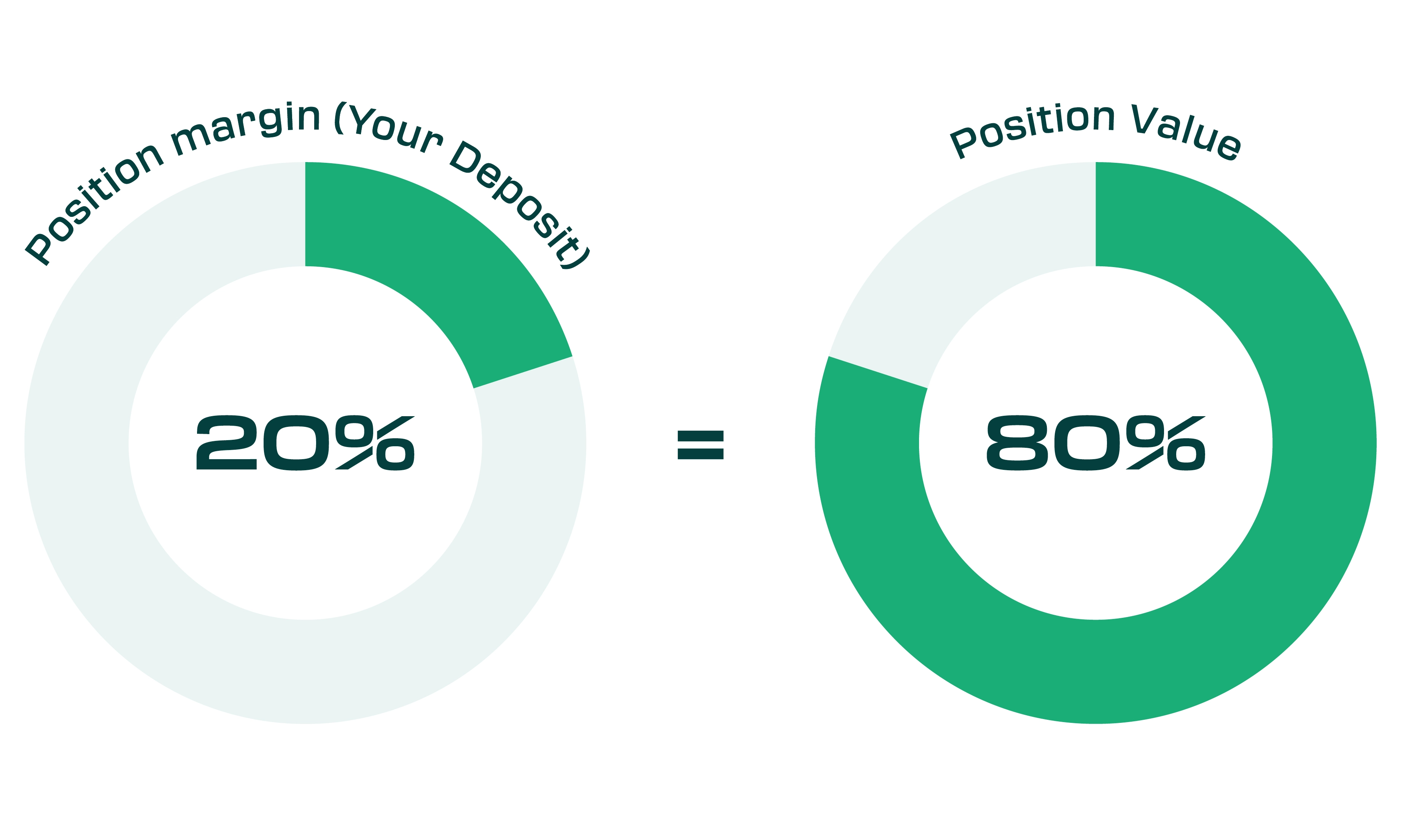
You’ll put down a margin deposit - a minimum amount of capital in order to maintain positions and cover any losses, which is a fraction of the trade’s full value - rather than paying the full price of the asset. Once the trade is open, your profit or loss fluctuates with the asset’s price changes. When you decide to close the trade, the difference between the opening price and closing price is calculated, and the broker will credit or debit your account with that amount.
- If the price moved in your favor: the broker pays you the price difference as profit.
- If the price moved against you: the difference is a loss, which is deducted from your account.
Trading using leverage gives you the ability to enter into positions larger than your account balance. Or put it another way, your ‘trading’ power and ‘earning’ power are increased. So, a small change in price moving in your favour gives you the chance of ending up with vastly bigger profits.
- In a normal share trade, say you wanted to buy 100 Apple shares – you would have to pay the full cost of the shares upfront.
- But with a leveraged product like a CFD, you might only have to find 20% of that cost, as your broker will fund the balance.
Example: How a CFD Trade Works
Let’s visualize a simple CFD trade to see how profit and loss are calculated. Suppose you go ahead and buy the Apple stock via CFDs :
- Opening the Trade: You buy or go “long”10 CFDs at $100 per CFD, so your notional investment is $1,000. If the margin requirement is 10%, you only need to put up 10% of the position’s value as collateral, $1,00 in this example (The remaining 90% of value is effectively borrowed from the broker through leverage.)
- Price Rises: Later, the Apple stock price has risen by $5 to $105. You decide to close the trade and sell the 100 CFD contracts.
- Profit Calculation: Your position is now worth $1,050 (10 x $105), so you have made a profit of $50. You’ll see roughly $50 added to your account (minus any transaction costs like the spread or commissions).
Now, consider if the price moved against you instead:
- Price Falls: Instead of rising, the Apple price drops by $5. You decide to close the trade to limit your loss and buy 10 CFD contracts.
- Loss Calculation: Your position is now worth $950 (10 x $95), so you have made a loss of $50. This amount is taken from your account.
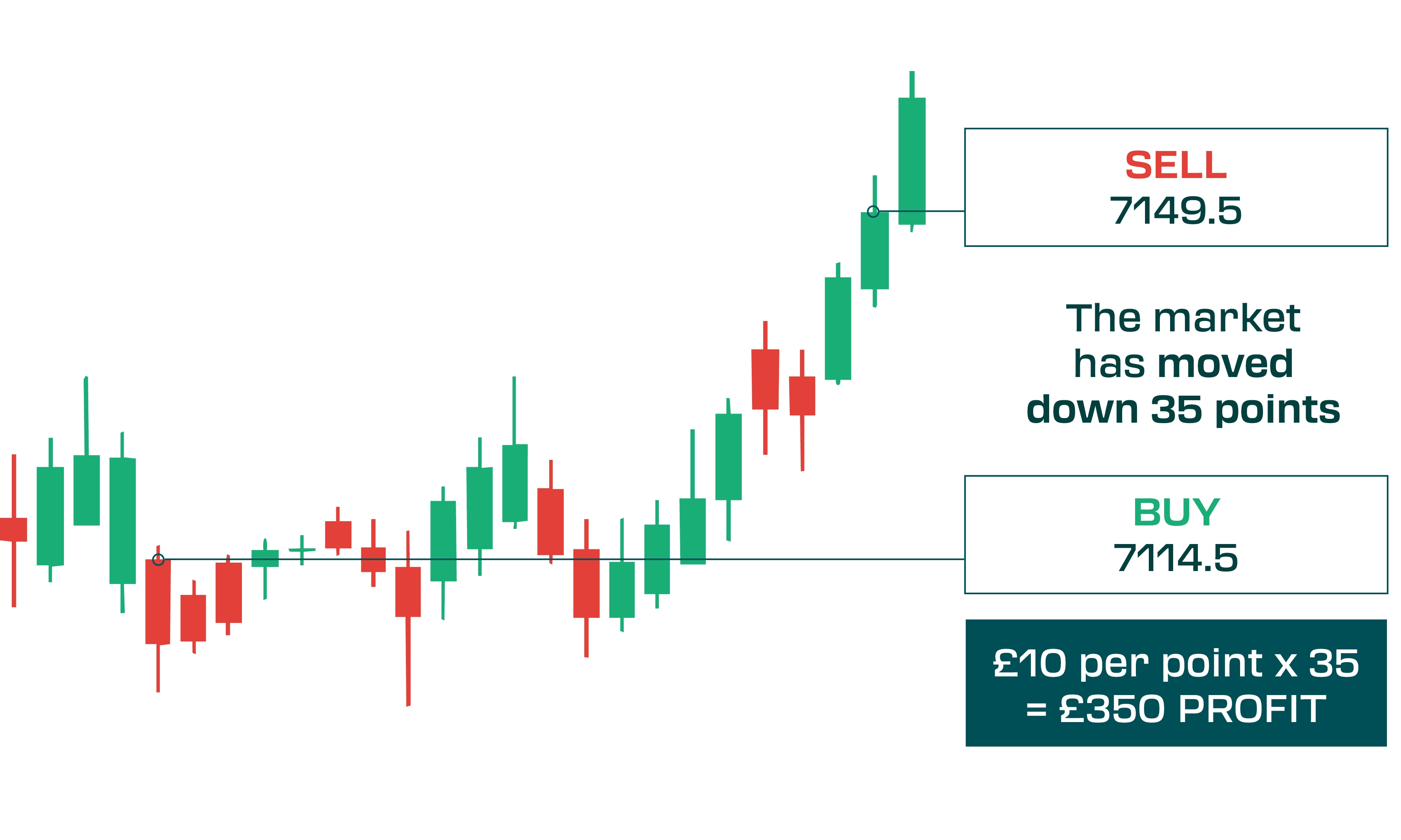
Remember, you are not buying or selling Apple, the physical stock. You are simply exchanging the difference in points between your opening and closing price.
So, for each point the price of your position moves in your favour, you make profit by the multiples of the number of CFDs you have bought or sold. On the flip side, you will make a loss for every point the price moves against you and this loss can exceed your deposits.
It is important to remember that trading CFDs on leverage allows you to trade positions larger than the amount of capital in your trading account, beyond your initial deposit. Trading on margin implies that both profits and losses can be magnified compared to your initial outlay, with losses exceeding your deposit. This is because they are based on the full value of the position.
Why Do Traders Use CFDs?
CFDs have become popular, especially among short-term traders, because of several advantages they offer:
Trade a Wide Range of Markets:
CFDs let you access global markets easily. You can trade stocks, forex pairs, commodities like gold or oil, stock indices, cryptocurrencies, and more from the same platform. This means you can diversify your trading without needing multiple accounts or owning any actual assets. It’s a one-stop way to participate in many markets.
Leverage – Larger Exposure with Less Capital:
CFDs are leveraged products, meaning you only need a small percentage of the full trade value (known as margin) to open a position. Leverage gives you greater buying power. For example, the three phase challenge has leverage up to 1:20, that means 20% margin allows you to control a $10,000 position with just $2,000. This lower capital requirement is a big draw of CFDs. However, remember that while leverage can boost your profits, it equally magnifies losses .
Go Long or Short with Ease:
As mentioned, CFDs make short-selling straightforward. There are no shorting restrictions – you can sell a CFD to bet on price drops just as easily as buying to bet on price rises. This flexibility means you have trading opportunities in both rising and falling markets, which is something traditional investors don’t typically have without special arrangements. If you think an asset is overpriced and likely to fall, you can use a CFD to potentially profit from that drop.
No Ownership Hassles:
Since you don’t own the underlying asset, you avoid certain costs and practical issues of ownership. For example, trading a stock CFD means you won’t have to deal with share certificates or paying stamp duty (in some countries) because it’s a derivative. Trading a commodity CFD like gold means you aren’t worried about how to store physical gold. However, you do miss out on ownership benefits like dividends (though some stock CFDs do adjust for dividends) or voting rights, because with a CFD you’re not actually a shareholder.
All these benefits make CFDs attractive for active traders who seek flexibility. It’s important to note that CFDs are generally used for speculative trading rather than long-term investing. Because of leverage and overnight fees (if you hold positions for more than a day), CFDs are more suited to short-term trading or hedging, not so much for a buy-and-hold strategy.
Risks of CFD Trading
While CFDs offer exciting opportunities, they also come with significant risks that you must understand:
Magnified Losses (Leverage Risk):
Leverage is a double-edged sword. It can magnify your gains but also your losses. If the market moves against you, you can lose money fast, because your loss is calculated on the full position size, not just your margin.
Drawdown and Account Risk:
Drawdown refers to the decline in your trading account from a peak after a series of losses. Because CFD trading can be volatile, a few bad trades can cause a sharp drawdown in your account equity. It’s important to manage position sizes and not risk too much of your account on any single trade to avoid large drawdowns. Keeping position sizes to 1% of the account is usually recommended.
Trading Costs and Fees:
CFD trading isn’t free. You typically pay the spread on each trade (the difference between the buy and sell price), which means the price has to move in your favor by at least that much for you to break even. Also, the broker will charge commissions on CFD trades.
Market Volatility:
Underlying markets can be volatile. Prices of stocks, commodities, or currencies can move dramatically on news or unexpected events. CFDs will reflect those price swings tick-for-tick. Sudden moves (gaps) can sometimes bypass stop-loss orders, resulting in slippage (execution at a worse price). It’s crucial to be aware of news and understand that high volatility can create both opportunities and increase risk.
Complexity and Psychological Risk:
CFDs are straightforward in concept but can be emotionally challenging. The combination of high leverage and fast-moving prices can lead to fear and greed cycles. New traders might overtrade or not stick to risk management rules, leading to big losses. It’s important to educate yourself (which you’re doing now!), and start with small trades. Discipline is key: treat CFD trading like a business, with a plan for when things go right and when they go wrong.
Bottom line
CFD trading is one of the most popular forms of trading financial markets today. Used wisely, CFDs offer an alternative to trading physical shares and commodities, but risk management is your best friend in this leveraged environment.
Remember, CFD trading can be an efficient way to access markets and potentially profit from price movements in both directions, but it comes with high risk. Always take the time to learn and practice.
Hopefully, this guide has helped you understand the basics of what CFDs are and how they work. Happy (and responsible) trading!
FAQs
What does “CFD” stand for?
CFD stands for Contract for Difference. It’s an agreement to exchange the difference in price of an asset from when you open the contract to when you close it. Essentially, it’s a contract with your broker where you settle on the price change of an underlying asset.
Do I own the asset when trading a CFD?
No, you do not own the underlying asset. With a CFD, you’re only speculating on price movements. For example, if you trade a CFD on Apple stock, you don’t become a shareholder of Apple, you’re just trading on Apple’s share price changes.
How do I make money from CFDs?
You make money by correctly predicting an asset’s price movement. If you buy (go long) a CFD and the asset’s price rises, you profit by the price difference when you close the trade. If you sell (go short) a CFD and the asset’s price falls, you profit similarly by the price drop. Your profit is the difference between the opening and closing prices multiplied by your position size, minus any fees. (If the price moves the opposite way, you incur a loss.)
What markets can I trade with CFDs?
CFDs cover a wide range of markets. Forex (currency pairs), stock indices (like the S&P 500 or FTSE 100), commodities (gold or oil.), cryptocurrencies, and more. This variety allows you to find opportunities across global markets across different time zones, all in one trading account.
How much money do I need to start trading CFDs?
Our CFD plans start at $42 for the three phase account.
Can a beginner trade CFDs?
Yes, beginners can trade CFDs, but it’s important to educate yourself first (just like you’re doing now) because the risks are higher than regular investing. Start with basic knowledge, use our accounts to practice, and don’t rush into using high leverage. CFDs require discipline and risk management, so make sure you have a plan for each trade.
Are CFDs risky?
Absolutely – CFDs carry significant risk. They are leveraged, which means both profits and losses can be magnified. Rapid market movements can lead to quick losses. It’s crucial to use risk management tools like stop-loss orders. While risk is high, you can manage it with proper strategies like keeping leverage low and avoiding oversized positions.
What fees do I pay when trading CFDs?
The common costs include spreads, which is the markup between the buy and sell price that you pay to enter the trade; and commissions on trades (especially for stock CFDs as some brokers charge a small commission per trade) The trade fee is usually displayed on the platform when you place a trade.
Are CFDs suitable for long-term investing?
Generally, no. CFDs are typically used for short-term trading. The leverage risk makes them less ideal for long-term holding as market volatility could wipe out a long-term position. CFDs shine as a trading tool for shorter time frames and tactical moves, rather than a buy-and-hold investment.